
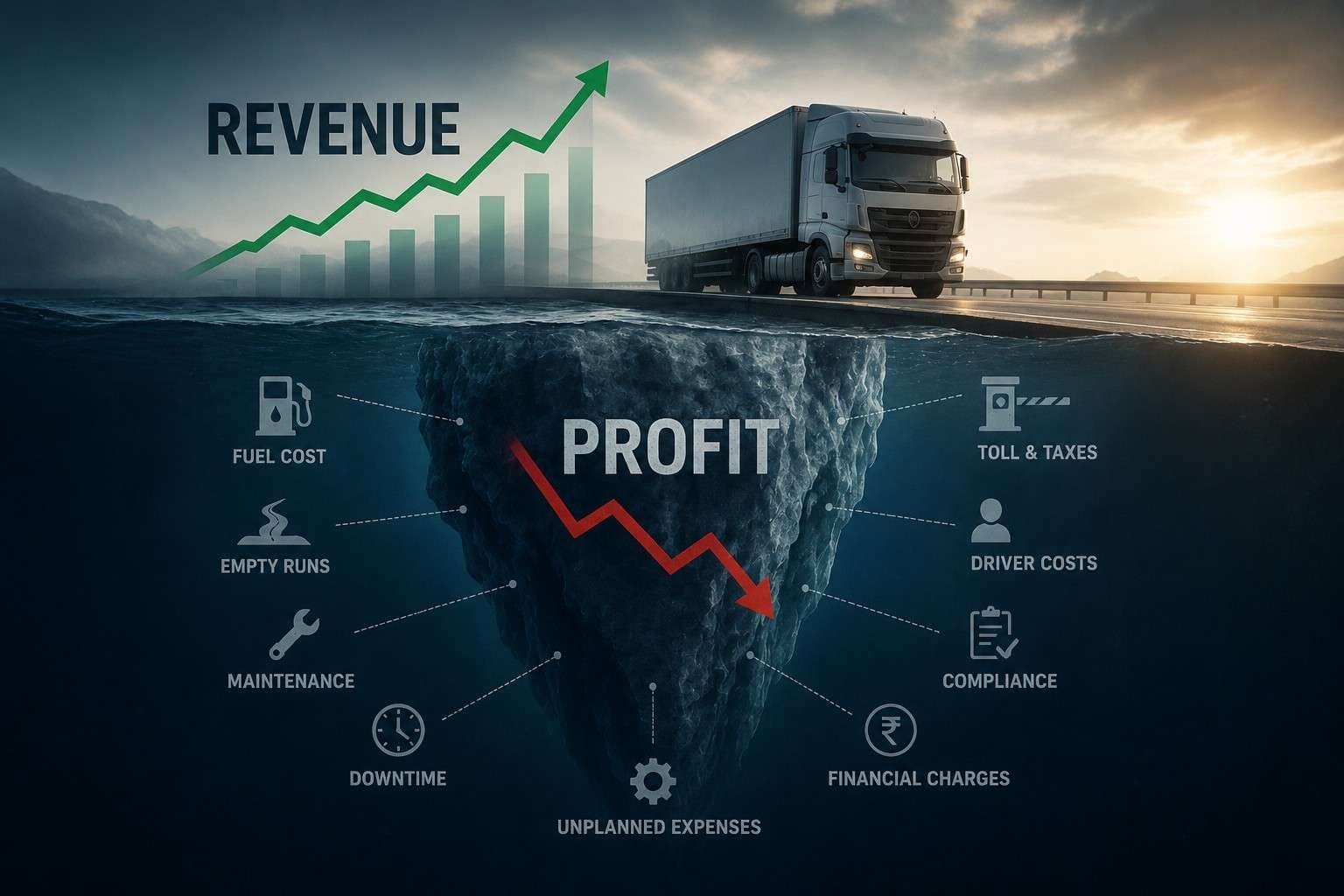
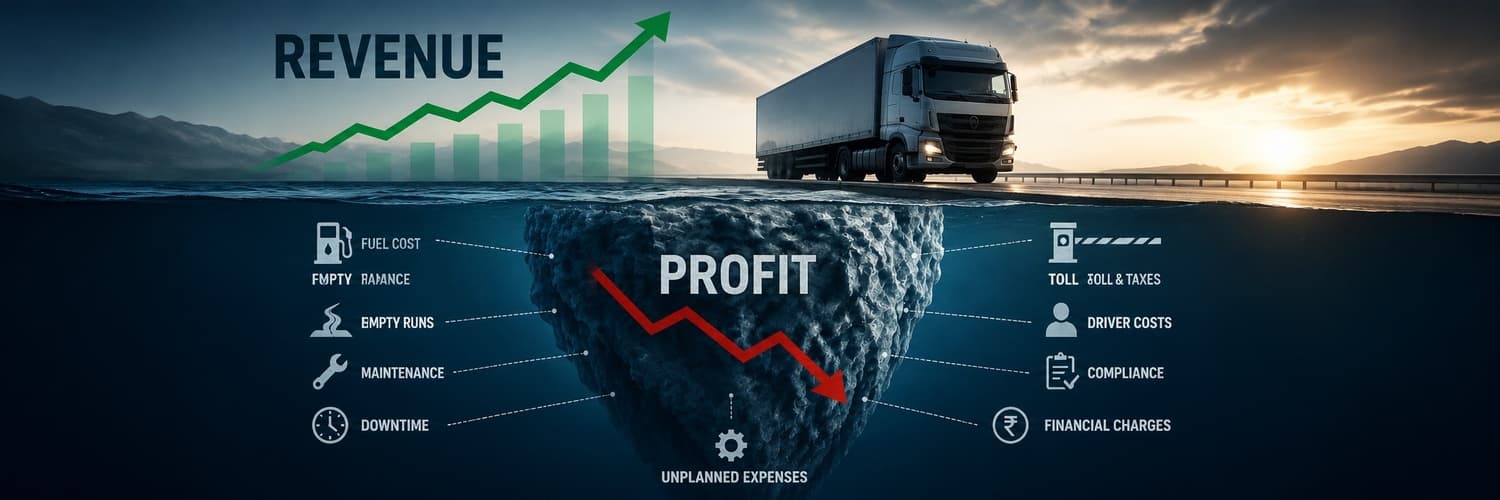
Growing revenue doesn't always mean growing profits. Discover the hidden costs reducing fleet profitability.
Revenue is often seen as the ultimate measure of business success.
More customers. More trips. More invoices.
On paper, everything looks positive.
Yet many transportation companies experience a surprising reality: despite increasing revenue year after year, their profits remain stagnant or even decline.
How is that possible?
The answer lies in understanding the difference between growing revenue and building a profitable transportation business.
Let's explore some of the most common reasons why transport companies lose money even while their top line continues to grow.
1. Revenue Doesn't Tell the Whole Story
Winning more contracts and completing more trips certainly increases revenue. However, every additional trip also brings additional costs.
Fuel.
Driver wages.
Tolls.
Vehicle maintenance.
Compliance.
Administrative expenses.
If these costs increase faster than revenue, profitability begins to shrink.
A business can proudly report record-breaking sales while quietly earning less profit than the previous year.
2. Hidden Operational Costs Go Unnoticed
Most transportation businesses track obvious expenses like fuel and salaries. The real challenge lies in the hidden costs that slowly eat away at margins.
Some common examples include:
- Vehicle idle time
- Empty return trips
- Route diversions
- Unplanned maintenance
- Driver overtime
- Detention charges
- Administrative delays
- Compliance penalties
Individually, these costs may seem small.
Across hundreds of trips every month, they can significantly reduce profitability.
3. Empty Kilometres Cost More Than You Think
A truck returning without a load still consumes fuel.
The driver still needs to be paid.
The vehicle continues to depreciate.
Yet no revenue is generated.
Empty kilometres are one of the biggest hidden expenses in transportation.
Improving route planning and increasing backhaul opportunities can have a major impact on overall profitability.
4. Delayed Billing Slows Cash Flow
Completing a trip doesn't immediately improve financial health.
Revenue only becomes valuable when invoices are generated and payments are collected.
Manual billing processes often lead to:
- Invoice delays
- Payment delays
- Cash flow issues
- Higher working capital requirements
Growing businesses cannot afford slow financial cycles.
Faster billing means healthier cash flow and greater financial stability.
5. Fleet Utilization Is Lower Than Expected
Adding more vehicles doesn't automatically increase profits.
If vehicles spend excessive time waiting for loads, undergoing repairs, or remaining idle, operating costs continue while revenue generation slows.
Successful transport companies focus on maximizing vehicle utilization rather than simply increasing fleet size.
6. Rising Fuel Costs Reduce Margins
Fuel remains one of the largest operational expenses in transportation.
Even a small increase in fuel prices can significantly affect profit margins.
Without proper monitoring, businesses may also face:
- Excessive fuel consumption
- Fuel wastage
- Route inefficiencies
- Poor driving habits
Controlling fuel-related expenses is essential for maintaining long-term profitability.
7. Maintenance Is Treated as a Cost Instead of an Investment
Many businesses postpone preventive maintenance to reduce short-term expenses.
Unfortunately, delayed servicing often results in:
- Unexpected breakdowns
- Higher repair costs
- Missed deliveries
- Vehicle downtime
- Customer dissatisfaction
Preventive maintenance helps reduce long-term operational costs and improves fleet reliability.
8. Poor Visibility Leads to Poor Decisions
Managers make better decisions when they have accurate information.
Without operational visibility, important questions become difficult to answer.
- Which routes are most profitable?
- Which vehicles have the highest operating costs?
- Which customers generate the best margins?
- Which drivers consistently perform well?
When businesses rely on assumptions instead of data, opportunities for improvement are often missed.
9. Growth Increases Complexity
As transportation businesses grow, operations become more challenging.
More vehicles.
More drivers.
More customers.
More branches.
More compliance requirements.
Without efficient processes, administrative work grows alongside revenue.
Instead of improving efficiency, teams spend more time coordinating information, updating spreadsheets, and resolving operational issues.
Growth should increase profitability not administrative complexity.
10. Profitability Should Be Measured, Not Assumed
Many businesses review financial performance only at the end of the month.
By then, opportunities to improve profitability have already passed.
Successful transportation companies continuously evaluate operational performance, identify inefficiencies early, and make timely business decisions.
The businesses that consistently improve are the ones that regularly measure what truly m
Building a More Profitable Transportation Business
Revenue is an important indicator of business growth, but it should never be the only one.
Long-term success comes from understanding where money is earned, where it is lost, and how operational efficiency impacts profitability.
By reducing hidden costs, improving fleet utilization, streamlining billing, controlling expenses, and increasing operational visibility, transportation businesses can convert revenue growth into sustainable profit growth.
How Oreqo Helps Transportation Businesses Improve Profitability
Managing profitability requires more than spreadsheets and disconnected systems.
Oreqo brings together trip management, fleet management, driver management, expense tracking, compliance monitoring, billing, and operational reporting into a unified platform designed specifically for transportation businesses.
Instead of spending valuable time gathering information from multiple sources, transportation companies can gain better visibility into their operations, identify inefficiencies, and make informed business decisions with confidence.
Whether you're managing a growing fleet or looking to improve operational efficiency, choosing the right technology can play a significant role in building a more profitable transportation business.
Final Thoughts
Growing revenue is encouraging, but revenue alone doesn't guarantee success.
The most successful transport companies don't just focus on winning more business they focus on operating more efficiently. Because in transportation, profitability isn't determined by how much you earn.
It's determined by how much you keep.