
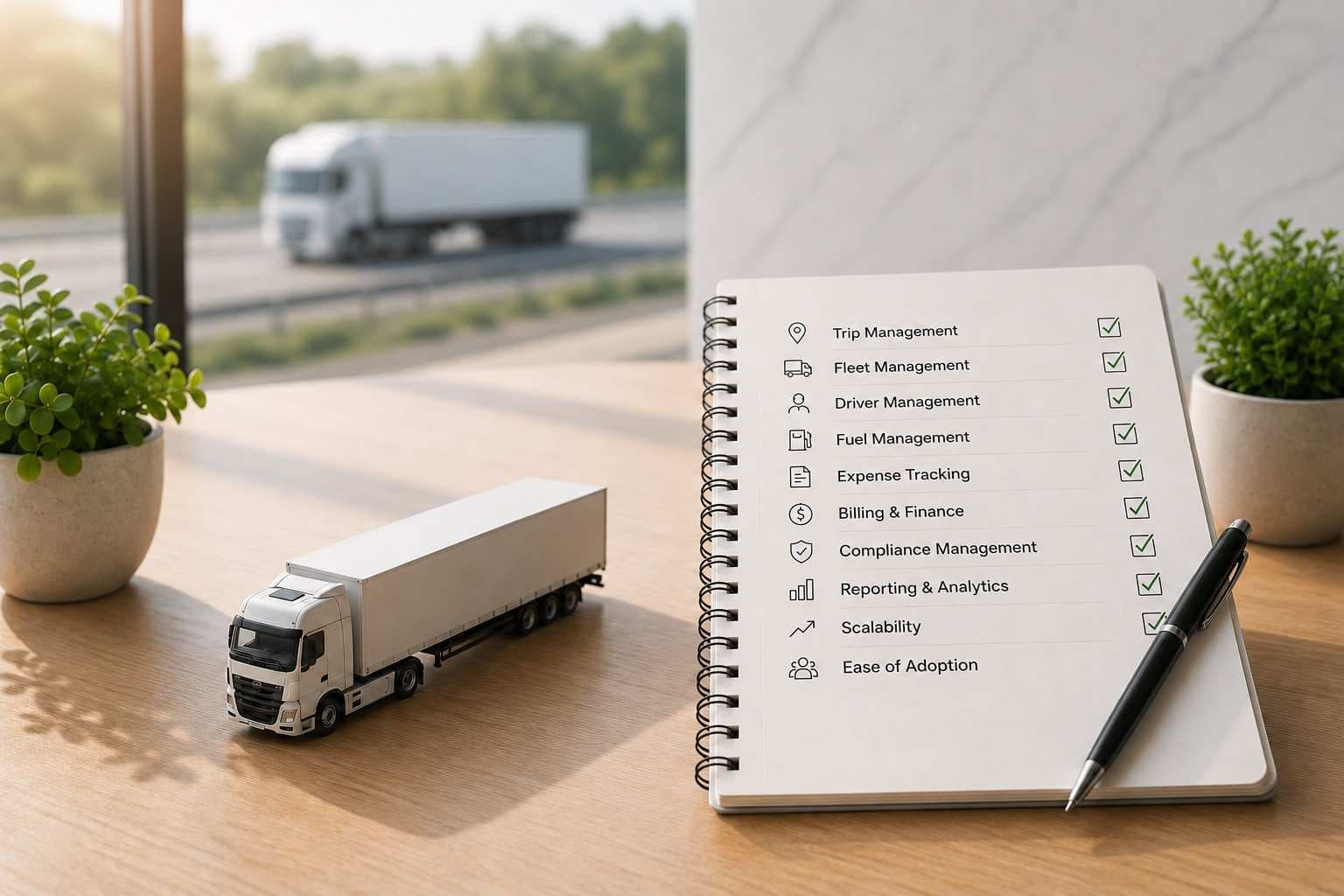

Things Every Fleet Owner Should Evaluate Before Investing
Managing a transportation business has become increasingly complex. Fleet owners today must manage vehicles, drivers, trips, fuel expenses, compliance requirements, billing, and customer expectations—all while maintaining profitability.
Many businesses turn to Transport ERP software to streamline operations and improve visibility. However, selecting the right platform can be challenging. With numerous options available in the market, choosing software based solely on feature lists or pricing can lead to costly mistakes.
Before making a decision, every fleet owner should evaluate a Transport ERP against the following criteria.
1. End-to-End Trip Management
Trips are the foundation of every transportation business.
An effective Transport ERP should support the complete trip lifecycle, from planning and allocation to execution and closure. It should allow teams to track trip progress, manage expenses, record operational activities, and maintain a clear history of each trip.
When trip information is scattered across spreadsheets, emails, and messaging applications, operational visibility becomes difficult. A centralized system helps reduce manual effort and improves coordination between teams.
2. Comprehensive Fleet Management
Fleet performance directly impacts profitability.
Before selecting a platform, evaluate how effectively it manages vehicle information, maintenance schedules, permits, insurance records, and operational history.
As fleets grow, manually tracking vehicle-related information becomes increasingly difficult. Missing a permit renewal or delaying vehicle maintenance can result in operational disruptions and unnecessary costs.
A Transport ERP should help businesses maintain complete visibility across their fleet while reducing administrative overhead.
3. Driver Management Capabilities
Drivers play a critical role in transportation operations.
The software should support driver record management, document tracking, assignment management, and performance monitoring. It should also help organizations maintain up-to-date records of licences, certifications, and other compliance-related information.
Without a structured system, driver-related processes often become dependent on manual tracking and follow-ups.
4. Fuel Cost Monitoring
Fuel is one of the largest operating expenses for transportation businesses.
Even small inefficiencies can have a significant impact on margins when multiplied across an entire fleet.
When evaluating a Transport ERP, assess its ability to record fuel transactions, maintain consumption records, and provide meaningful visibility into fuel-related costs.
Better fuel visibility often leads to better operational decisions.
5. Expense and Cost Tracking
Transportation businesses incur expenses beyond fuel.
Driver allowances, toll charges, maintenance expenses, loading costs, unloading costs, and miscellaneous operational expenses all contribute to the overall cost of operations.
A Transport ERP should help businesses capture and organize these expenses in a structured manner. Accurate cost visibility enables management teams to make informed decisions and maintain control over profitability.
6. Billing and Financial Management
Delayed billing can negatively impact cash flow and business performance.
The right software should simplify invoice generation, freight billing, expense reconciliation, and financial reporting. Businesses should look for solutions that help reduce manual effort and improve the accuracy of financial processes.
Efficient billing workflows can significantly improve operational efficiency and revenue realization.
7. Compliance Management
Transportation companies operate in a highly regulated environment.
Vehicle permits, insurance policies, pollution certificates, fitness records, and driver documentation require continuous monitoring and timely renewals.
Failure to maintain compliance can lead to penalties, vehicle downtime, and operational disruptions.
A Transport ERP should assist businesses in maintaining visibility over critical compliance requirements and reducing the risk of missed deadlines.
8. Reporting and Business Visibility
Data is valuable only when it supports better decision-making.
Fleet owners should evaluate the reporting capabilities of any software they consider. The platform should provide meaningful insights into operational performance, fleet utilization, expenses, revenue trends, and business efficiency.
Reliable reporting helps management teams identify opportunities, address inefficiencies, and make informed decisions.
9. Scalability for Future Growth
The needs of a business evolve over time.
A solution that works effectively for a small fleet may not support the operational complexity of a larger organization.
Before selecting a platform, consider whether it can support business growth, multiple branches, expanding fleets, and increasing operational demands.
Investing in scalable technology can help avoid future disruptions and costly system migrations.
10. Ease of Adoption
Technology delivers value only when teams actively use it.
Complex systems often result in low adoption rates, inconsistent data entry, and operational resistance.
Businesses should evaluate how intuitive the software is for operational teams, fleet managers, finance teams, and administrators. A user-friendly platform can significantly improve implementation success and long-term value.
How Oreqo Aligns with Modern Transportation Needs
As transportation businesses continue to digitize their operations, many are looking beyond traditional software tools and seeking platforms that can support long-term growth, operational visibility, and process efficiency.
Oreqo is built specifically for transportation businesses and brings together trip management, fleet management, driver management, expense tracking, compliance monitoring, billing, and operational reporting within a unified platform.
Instead of relying on disconnected systems and manual processes, businesses can manage critical transportation workflows through a centralized environment designed for operational control and business scalability.
Whether you are managing a growing fleet, expanding into new regions, or looking to improve visibility across your transportation operations, selecting a solution that aligns with your long-term business goals is essential.
Making the Right Decision
Choosing a Transport ERP is not simply a technology decision it is a business decision.
The right platform should help transportation businesses improve visibility, streamline operations, strengthen compliance, control costs, and support long-term growth.
Rather than focusing solely on feature lists, fleet owners should evaluate how effectively a solution supports their day-to-day operations and future business objectives.
A well-chosen Transport ERP becomes more than a software system. It becomes a foundation for operational efficiency, informed decision-making, and sustainable business growth.
If you are evaluating Transport ERP solutions in 2026, take the time to assess your operational challenges, growth plans, and reporting requirements. The right decision today can have a lasting impact on your business for years to come.